This Must Be the Place – Sedona, Arizona

I always found the song This Must Be the Place by the Talking Heads to be so incredibly ethereal. From the first chords of the song, I can feel myself welling up. The definition for ethereal is truly the way I feel about that song– “extremely delicate and light in a way that seems too perfect for this world.”

It’s a delicate song…flawless and light, even effervescent. It seems too perfect for the bold brashness of this world.

I believe I have found this song’s doppelgänger in PLACE. I didn’t know what to expect when we recently headed down to Sedona for a hiking vacation. I just knew that the red rocks of Arizona were always on my bucket-list. And that it was a place I had to visit before dying.

sedona1
I was taking pictures before we even finished our two hour car ride from the Phoenix airport to Sedona…

From the moment we landed, I knew that I was coming home (one of the many ‘soul’ homes I have discovered around the world, I should add). Once I had my feet on the ground–and my head in that sky–I knew it would be the most painful thing to leave there. From day one, Sedona was a breathtaking beauty I have yet to discover anywhere else in the world.

I have to confess here that I did absolutely zero of the heavy planning that was involved in this trip. I simply gave the vague idea that hiking red rock and desert and Arizona was high on my bucket-list. Here’s the itinerary as I remember it (Not including the day we arrived):

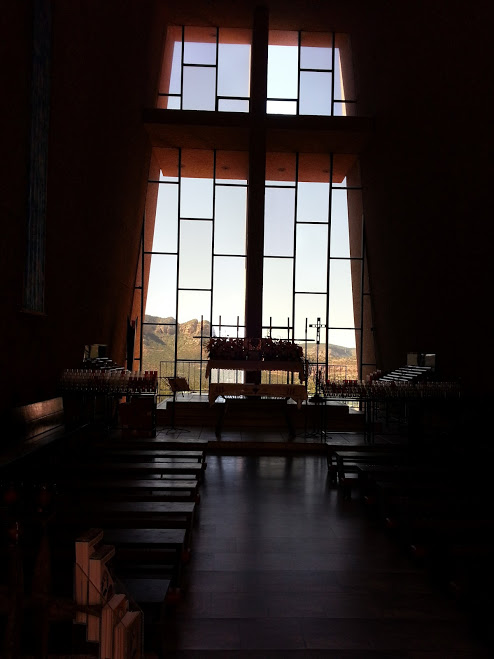
Day 1 – Guided Trolley Ride that included the Chapel of the Holy Cross. The trolley driver and tour guide was amazing! A Vietnam vet with a thousand stories. He had been everywhere and done everything. He was as entertaining as the scenery was beautiful. If you go to Sedona, a great way to begin your journey is by easing into things with a Trolley tour. SEDONA TROLLEY

church
Chapel of the Holy Cross in Sedona (a church built into the buttes)
church2
The church was gorgeous inside and out.
pool.jpg
As with most days, Day 1 was capped off with an afternoon at the mostly abandoned pool. The last stop prior to an evening of dining amidst the scenic views of Sedona’s restaurant patios.

Day 1 Restaurant Choice was THE HUDSON. It was so good, and the views were so amazing, that we secured a reservation for later in the week before we left. The pics below show the views from our patio table, the butcher’s block (charcuterie), and, a statue we encountered just prior to entering the restaurant. There’s a couple art galleries in the same mall parking, and there are plenty of beautiful sculptures and statues throughout the area. This one, of a boy lifting a frog up out of a pool of water, reminded me of my grandson Edward and his lifetime love of all things FROGGY and GREEN! I mean, that statue IS him.

Day 2 – Airport Loop! This was a fun hike. Just a short walk from where we were staying, we got to add a couple miles to the hike just by walking there. What surprised me about the Loop, right at the onset of the hike, was how seemingly dangerous it felt. You were CLOSE to the edge right away. Rather thrilling when I was expecting an EASY hike.

The prickly pear cactus (Seen in the pick above, with the red berries growing on them) is quite beautiful, as cacti go. And they can be found all through the hills and valleys of Sedona. Our trolley guide explained to us that he picks the berries and his wife makes prickly pear jelly with them.

The restaurant patio of the day was SALTROCK SOUTHWEST KITCHEN. It had a lovely view and an amazing martini that was as spicy as it was boozy. The food was delicious and our waitress was awesome. There was one little hitch I noticed, but it didn’t take away from the overall experience, really. A visitor to our table seemed uncomfortably awkward each time he appeared (Once dumping bread on a fly-by and telling us it was free and to eat it). Other than that, it was quite lovely.

Next up? Day 3 – Chuckwagon Trail and DEVIL’S BRIDGE! Devil’s Bridge was one of the extreme highlights of the hiking tour, which I’m sure it is for many-a hikers.

Chuckwagon Trail was so indicative of the Western movies I grew up on in the 70s. It was down in a valley filled with rock and dried creekbed and cactus and dessert shrubbery…with 360 views of mountains, mesas and outcropping. Marvelous beauty…a perfect film set!

Even with all the wonder and beauty offered to us hiking through Chuckwagon, we were not prepared for what we were about to encounter!

DEVIL’S BRIDGE!

This slideshow requires JavaScript.

The bridge was dangerous and thrilling…exactly what I was expecting from a medium hike in beautiful Sedona. It was heart-racing to be out on that ledge far above the valley below. Absolutely loved this entire day…it was a great mix of landscapes and scenery!

I’ll cover day 4 and onward in a separate post, as I’m afraid this one is getting too long. Must get it all out before the details blur together and become not day after day after day, but rather THAT trip to Arizona. (-:

THIS MUST BE THE PLACE!

Digging in the Dirt – How to Repurpose Your Buried Words

The first rule of Write Club is…follow all the rules of Write Club. The second rule of Write Club is…there are no rules in Write Club. Therein lies the conundrum. We writers are a cocktail of confusion and contradictions. But there’s one thing we should all get into the habit of doing. We should all be dedicated pack-rats when it comes to our words. We write the words we write for a reason. That reason may not always be clear when the words are being put down on paper or screen, but we should train ourselves to value them for what they are and what they may one day become.

IMG_0899.JPG
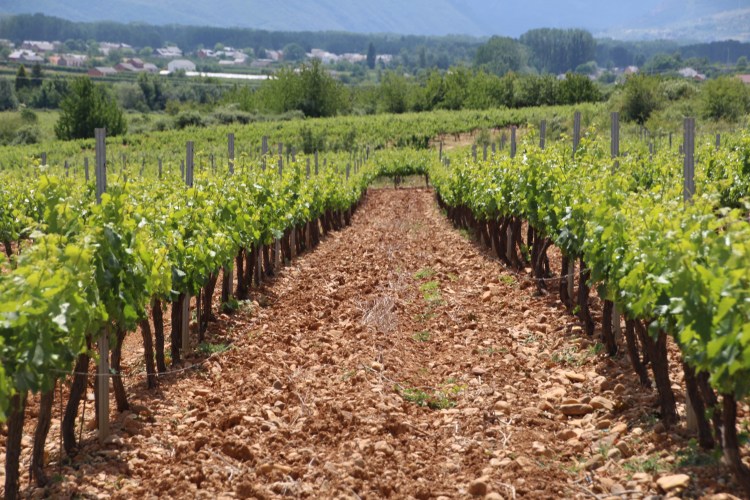
Treat your unused words like a garden you can later visit and harvest…

It’s true. Your buried prose and poetry can be repurposed. Have you ever written the first few lines of a poem because they grabbed you with the intensity of fire? Did that fire then fizzle out and force you to discard the work you felt so powerful for having created? Have you spent countless hours, days, weeks, months on a manuscript that you later tossed aside in frustration? Or how about those amazing middle-of-the-night ideas that left you breathless and certain you just came up with the plot for the next Great Canadian Novel? We’ve all been there, on the brink of a brilliance almost touched. I call these moments epiphonies. They’re like epiphanies, but they didn’t quite get you there. They’re phony aha moments, the bane of the writer’s existence. Or, at least mine.

I’m here to tell you to NOT give up. Don’t let these fly-bys into momentarily enlightened consciousness go to waste. If you wrote it, it meant something to you at the time. What’s the cost of saving your words nowadays? Nothing. Your disk-space can handle it.

IMG_3457.JPG
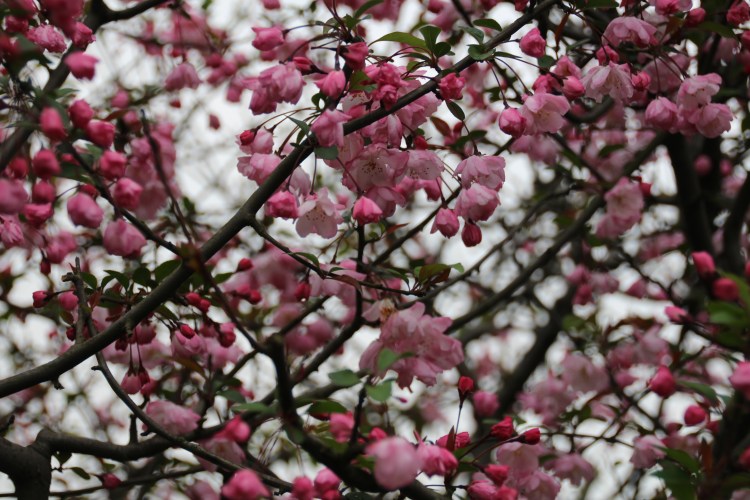
Trust that you saw beauty in your words, and that you will find a place for them…or a lesson from re-exploring them.

But how do you reuse, reinvent, recycle, repurpose, re-imagine? Any old way you can. Seriously. First, create a Spare Parts folder. Second, save everything that doesn’t come to fruition as a poem, short story, article, novel, song, etc into this folder. Name your documents wisely so you can remember what they are at a glance. Third, dig in the dirt of this folder every opportunity you have. Pry, pull, wrench, yank, rip and pluck any and all of your buried words and use them in any way you can.

Examples of how I returned to my Spare Parts folder and harvested words from it? Most recently, I stole a character from a novel that was three quarters written when it died. The heavy work on the character was already completed through the birthing of the fizzled out novel. He appeared to me in full, having already been alive in a previous work. I took some prose with me when I excavated him, but mostly I took him…his essence. You can do this with characters or setting or any little aspect of the original novel that you still love and wish you could use. There’s also the time I had a last minute opportunity to have a short story included in an anthology…but no time to write one. I looked through my folder and found another dead-in-the-water novel and I stole the first chapter. I made a few minor changes and, presto-magico, I had myself a short story! Another reason to save your drawer novels is time, growth, and the redoubling of your writerly wisdom through workshops and classes. One of your old unfinished trunk novels may very well be brilliant, but perhaps you didn’t have the wisdom needed to execute the idea to its full potential four years ago. After taking certain workshops, it might be helpful to revisit a dead novel. With your new eyes, you may see a way to rescue it.

Lines and stanzas from unfinished poems? Months later, when you’re having a dry-spell and wishing you could get your poetical groove on…steal those lines, use them as jumping off points for new poetry. Another thing you could do with poetry, once you have a pile of unfinished poems (and this will happen…it always does) is attempt to piece them together. You could very well have a complete poem living among the rubble of seven discarded ones. You must dig through the dirt to find the gold.

IMG_0307 - Copy.JPG
Dig through the dirt to find the gold.

Save everything. Inspiration moments give you lovely little gems. Respect that. They might not be fully formed diamonds, but guaranteed there is something in there worth excavating at a later date. Trust your words and trust why you wrote them. Even if you never unearth them for future projects, it can be amazingly useful to revisit your older words for no other reason than to see how much you have grown as a writer since you first wrote them. That’s a reward you wouldn’t get if you deleted everything that fizzled.

So, be kind to yourself. Save your words. You never know when you’re going to need them. Spare Parts are like little treasure chests of pretty things. If you dig in the dirt long enough, you’ll find your diamond. And you’ll be happy you didn’t throw it away.


The Summing Up – After the Marathon

My first Muskoka Novel Marathon in 2007 was essentially a religious experience. From the drive up to Huntsville to the drive to the Kawarthas after I partook of the 48hr version of the marathon. It was all a haze of Kool-aid drinking meditating worshipping wonder. I was sold. I was a convert. I had found my people, my place, my me.

Eventually, I attempted to get that religious experience down on paper in the form of a poem. But the real joy of writing poetry is in the moments leading up to the writing of the poem and in the hope you feel that you achieve the goal of getting everything in your head down in the stanzas that you write. You never quite get there…you feel the euphoria of being there in your mindscape…but what travels from that video screen in your head through your fingers and eventually lands on the computer screen or paper is nothing like the vision you carried. It sometimes suffices, but it never meets the vision. Words are never enough.

13658980_10153620157102021_5222252651703869556_n

Here’s the poem I wrote about my first Muskoka Novel Marathon experience:

After the Marathon

As winter whips its winds to frenzy
I am reminded of that time-
forty thousand words in my head
screaming white freedom
inside my withering mind.

And after the marathon,
the tears of no more words,
my insolent venting of could have-
might have beens. And the exhaustion,
like melting ice on pregnant lips,
a scream inside an empty car
with nobody else to hear.

When I thought the oddity over-
passing from Muskoka to Haliburton
with Cohen on my lips-
two deer arrive,
linger long enough to catch my eye,
to stop my hurling car,
to say, “I see you. You are real.”
And tears again. To find yourself
when you are lost; a figment
behind an endless stream of words.

After the deer, when Hallelujah
has played and the light of day declines,
I pray, one hundred-thirty pages
strewn like wild wind across the cluttered dash,
and here am I… stopped again-
a wild bear on hind legs,
pawing the slowly gloaming air.

Stopped, I wonder the wonder,
breathe to say, “I’ve been here too.”
And in the rear-view… three more,
mother, babies dawdling behind the car.
And the bear, as if he knows my head
and where it’s at, he paws again,
lifts his massive claws to night and speaks.

These are the things that I have left,
the shaking memories of a whirlwind journey took.
And forty thousand words inside my lonely head
was not enough. A bear to stand and scream
is what it took to leave it all behind,
the vent, the Cohen din inside the tremulous mind,
and most of all, the words that could have been.


THE WORDS THAT COULD HAVE BEEN. Every year I regret those words. Every year I mourn them. But I also give thanks for the ones I eventually get down on paper. This year is no different. I went a long time before locking into a story idea…almost a full 24 hours. I do the 72hr marathon now…stay the whole three days. After that first year, I knew I wanted more. More, more, more. 48hrs is not enough.

I already wrote a marathon wrap post when I got home, but I wanted to talk about what happens immediately following coming back to the land of reality. I say reality, because at the marathon it’s a different kind of reality that happens. There is a freedom at the marathon that is very much like sleep-a-way summer camp. It’s silly and frivolous and fun..and very very serious. It’s not the reality we, as adults, are used to. Schedules evaporate…we are on OUR TIME. So, coming back to the land of adulting…you need to adjust, put away the candy and get real.

When you get back to reality, it’s also the first time you get to sit down and read your words. At the marathon, you write and you write and you write. But you don’t read (or, at least, I don’t…I have to point out here that every marathoner is different). You just move ever forward into your story. What happens, essentially, is that you start reading it a couple days after your return and it’s like you’re reading the work of someone else…you don’t remember it, you’re not very deeply connected to it…the concept is familiar, but the words are by and large new to your ears. It’s an extremely odd phenomenon, really. You wrote the story, but it’s not yours. It belongs to the wildness of the weekend. It belongs to Muskoka.

You never quite know what you ended up with until you sit down and read your story for the first time. It’s an eye-opening experience. I’ve come to believe that I write my best stuff at the marathon. Not because it’s a particularly wonderful writing environment–even though it IS–and not because I go in prepared–because I DON’T–but because I connect to Natalie Goldberg’s WILD MIND while I’m there. There is a moment when you put your ego aside and you are no longer a writer writing, but simply WRITING itself. You lose connection to your self as you slip sleeplessly and exhaustingly into your story and soldier on ever forward. THAT is the beauty of the marathon…that you get to dive so fully in to your writing that you disappear. Somewhere after 16 hours, 23 hours, 56 hours…YOU are gone and there is only story—and these seemingly disembodied hands in front of you pounding away at a keyboard you’re barely aware of. WRITING. NO YOU. I know, I know…it’s so zen. It’s hogwash. It’s flighty. It’s new age crap. SHUT UP! Until you’re there, at the marathon, you’ll have to take my word for it. I WAS Wild Mind.

What happens now—THE SUMMING UP. I’ve been reading and editing my novel. I only reached about 100 pages this year, as I didn’t immerse myself into the story until I was a full day into the marathon. My regret was huge. But as I slowly trudged my way into the story, I began to feel better about my productivity. I like it! I like the words that I created. I’m okay with them. AND…I feel that I will be able to continue the story once I get to the end of the editing journey I’m on to read and fix what I left the marathon with. I’m excited about finding out where the story goes, where the lives in the story are taken. I’m turned on by the need to bring it to fruition—TO SEE WHAT HAPPENS!

I have been feeding Michael chapters on my Kindle account as I read and edit them. He has an uncanny ability to find nits and suggest fixes. Last year, his influence was a huge part of my novel writing experience. Without him, I’m not sure I would have finished the novel. This time around, as I am writing about New Brunswick, I have to admit he’s having a bit of an issue with dialogue. If the East Coast of Canada is your ancestral home, you know that there is a dialect to be found there. What might look like twisted and incorrect language is merely the way they talk there. I have a few characters who are very regional. They say things the way New Brunswickers would say them. Editors need to leave these bits in. Regional dialect helps to place a story…it’s all part of the story’s setting. Michael’s just gonna have to flinch at some of these twisted words being spoken by my characters. Especially the story’s grandmother, Imogene, who has shall we say a slightly unique way of speaking.

I’m ready to embrace the rest of this novel’s journey. What the marathon did was start me off…it gave me the roadtrip part of the novel, and brought me to the meat and potatoes of my story. I’m excited to continue. And I have this wonderful thing called the Muskoka Novel Marathon to thank for taking me this far. Every year it starts me off on a journey. I don’t always complete the novels it helps me create…but I always love the experience. And in September…we get to reassemble–us 40+ writers–and we get to award each other with trophies and kudos and praise. It’s the crown on top of the fundraising event. I can’t wait to get there!

But for now…I have a story to tell. It’s the story of Finn Barker, the character I created on a July Saturday night in Huntsville, Ontario while sitting in a room filled with writers creating. Finn is real. And I left him in a vulnerable situation at the end of the marathon. It’s time to rescue him.

Thank you, Muskoka Novel Marathon—for helping me to once again get words on paper. The wonder never ceases to amaze me. Yes, we raised over $34,000.00, and yes…the YMCA of Simcoe/Muskoka county is going to have much needed funds to help with their literacy programs. Yes…lives are going to change for the better because of what we were able to accomplish monetarily with the marathon. And that IS the most important thing here. But for us writers—we get the gift of words, the gift of time, the gift of camaraderie, and the gift of childlike sleep-a-way camp in a beautiful town filled with lovely places and people. The benefits to us writers are vast…and lasting. It’s a religion, and I’m only one of its many preachers. I drank the Kool-aid.

See you all at the wrap-up!


(A Short excerpt…the opening lines of my 2016 Muskoka Novel Marathon novel, which introduces the main character—Finn Barker.)

There’s more than one way to go home. Sometimes it’s something we can only do in theory because there’s no home to go back to. Even if it’s still standing. And sometimes we return kicking and screaming, like salmon running up river against their will but with an inborn instinct they cannot escape. Must go home. Must go home.

Unless you never truly left in the first place, chances are the road home will be a painful one. One that will leave you, to paraphrase the words of W.B. Yeats, in a world more full of weeping.

There is nothing like a death to signify the beginning of that journey home. Death and dying. For Finn Barker, that was the straw that finally broke his resolve to never again return.