While the snow accumulates outside, I thought it was a good time to revisit the end of our trip to Spain this past September. The trip was not yet over when we walked into Santiago de Compostela at the end of the Camino Frances. Our walk–our Camino–was over, but not our exploring.
There was still the END OF THE WORLD to see. My 4th time in Santiago de Compostela and I had yet to make the trek to either Finisterre or Muxía. Though we did not have the time needed to walk there, it was time to rectify things. We had to get to the end of the world before crossing back across the Atlantic to the New World.
The Cape of Finisterre in Galicia was once considered the literal end of the world. This is what the Romans called it, believing there was nothing beyond it. Nothing but water. The name Finisterre itself comes from the Latin FINIS TERRAE, meaning “end of the earth”.
There is an add-on Camino that takes in either Finisterre or Muxía…and some even do both. Being short on time, Michael and I instead booked a bus tour of the two places. I’ve been looking forward to seeing these two iconic Camino locations since I first learned about the Camino de Santiago. Just the idea of walking across Spain and coming upon the ocean at a time when you thought it the end of the world! It’s incredible. The two places must have been such reverent destinations back then. I can’t even imagine!
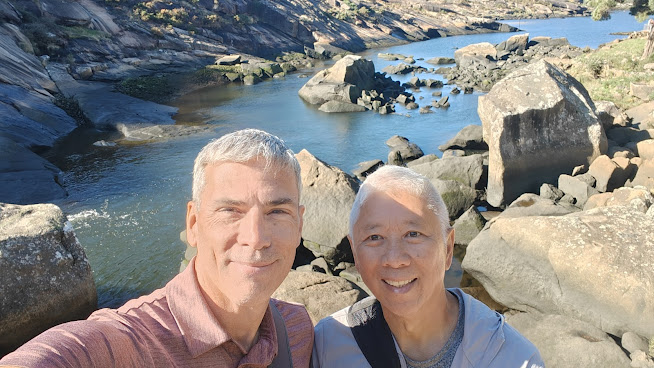
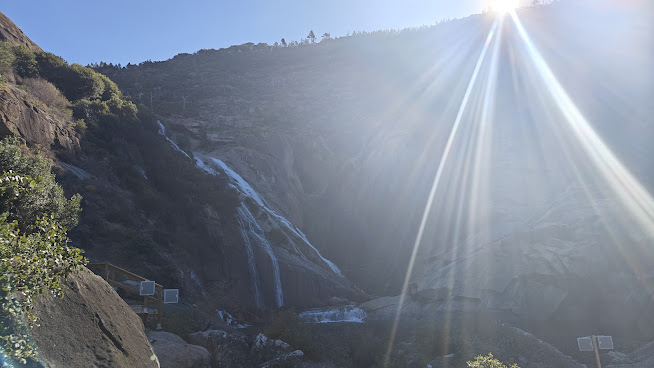
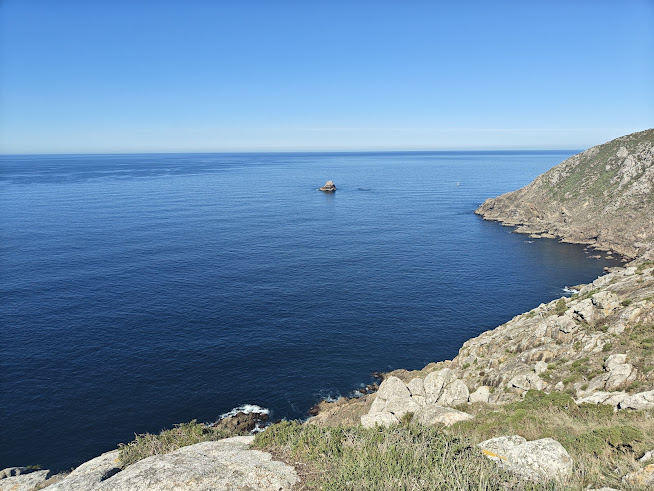
The first of the two iconic destinations to visit was Finisterre.


Nothing but water…
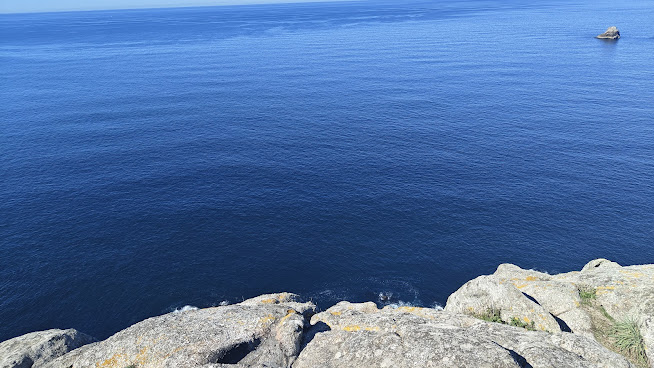


We were thrilled to be in Finisterre.
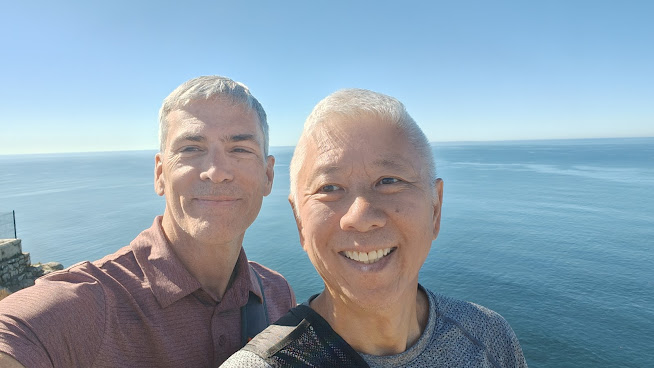
After a stop for lunch, we headed to Muxía. Of the two places, Muxía is quite possibly the more iconic. It was made famous outside Camino circles when TOM (played by Martin Sheen) spread the ashes of his son DANIEL (played by Emilio Estevez) into the water at Muxía at the end of the movie THE WAY. This is one of my absolute favourite movies. I’ve seen it countless times. Being there was an absolute dream come true!
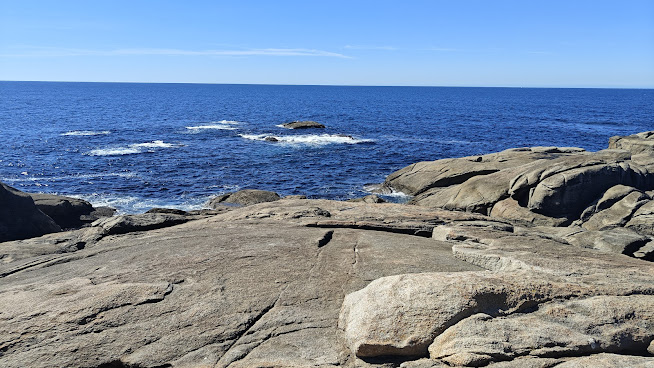
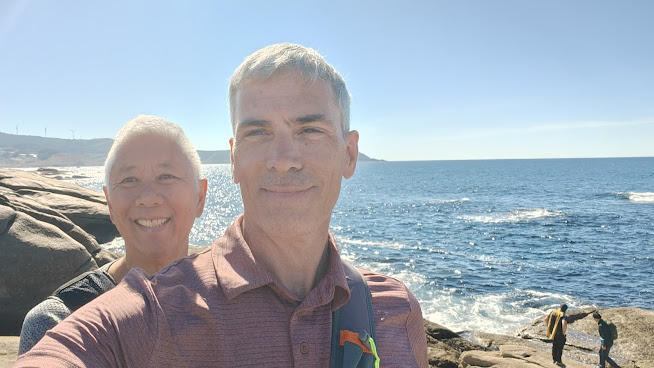
Yet another 0km milemarker to reach…

There’s something beautiful about the monolithic sculpture found in Muxía alongside the 0km milemarker. A Ferida (English: The Wound) stands more than 36 feet high and weighs 400 tons. Created by Alberto Bañuelos Fournier, it is the largest sculpture in all of Spain. It was inaugurated on September 12, 2003…and serves as a tribute to the volunteers who helped the people of Galicia after the Prestige oil spill of November 2002.

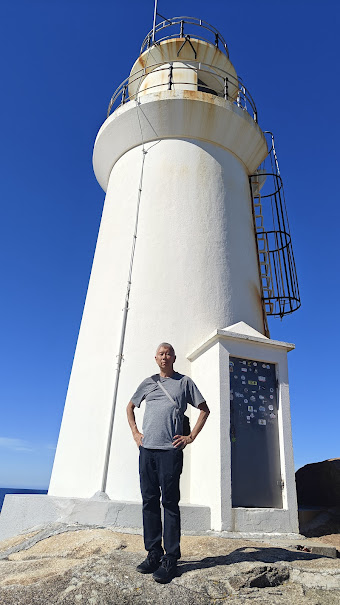
Beside the iconic Wound monument is Virxe da Barca Sanctuary. This church is from the 17th Century…


Of course, the spot where these things can be found were already iconic prior to Christianity coming in and rewriting history. Isn’t that ALWAYS the way. Where the church is now was a pre-Christian Celtic shrine and sacred spot.
I HAD to climb down below all the rocks on the shoreline and put my hands in the water. It was necessary!

If you find yourself in Santiago de Compostela at the end of your Camino and you don’t have enough time to walk to Finisterre and/or Muxía…do yourself a favour. Find a bus tour that will take you there. It took us one day to see both places and so much more. It was so worth it! We loved seeing these two iconic Camino de Santiago landmarks. Just imagine getting to these sacred places at a time when they were considered the literal end of the world! It’s unfathomable. They both had the air of sacred about them. So many thousands (millions) had come before us. What they felt when they looked out at the water! It must have been a profound mix of fear and exhilaration. Don’t miss the opportunity just because you don’t have the time to walk it. Take that bus!



 KEVIN CRAIG