Near/Far – The Journey of the Muskoka Novel Marathon

Once upon a time there was a magical place. It was in a land far, far away. And also quite near. It came to be that a hundred thousand brave warrior knights had heard of this magical place. Or forty or so, at least, give or take.

They set out on a rather long journey. For some it was far, and for others it was simply near. But even those brave warrior knights (let’s just call them writers, shall we) who came from near understood the metaphorical distance of the journey…the farness of their nearness, as it were.
image
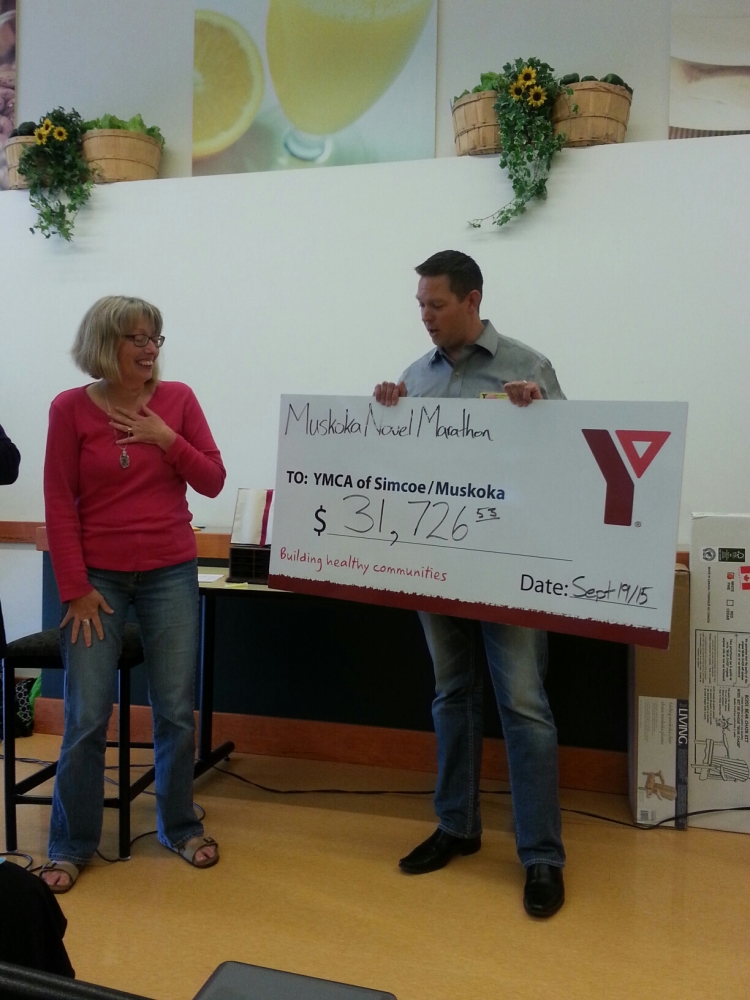
Each year, the marathon raises much needed funds for the literacy programs of YMCA Simcoe/Muskoka. We have a blast, but it’s not all fun. We have an underlying mission that we take most seriously.

It was such a grand time that was had by all that they decided to do it again. And again. And again. And again. The event became a yearly festival/spectacle of writerly endurance, wonder, and mirth.

This faraway land is known as Huntsville, in the province of Ontario, in the land of Canada. The magical place is not really a place, per se, but an event. Actually, I prefer to think of it as a Spectacular Spectacular. Of sorts.
image
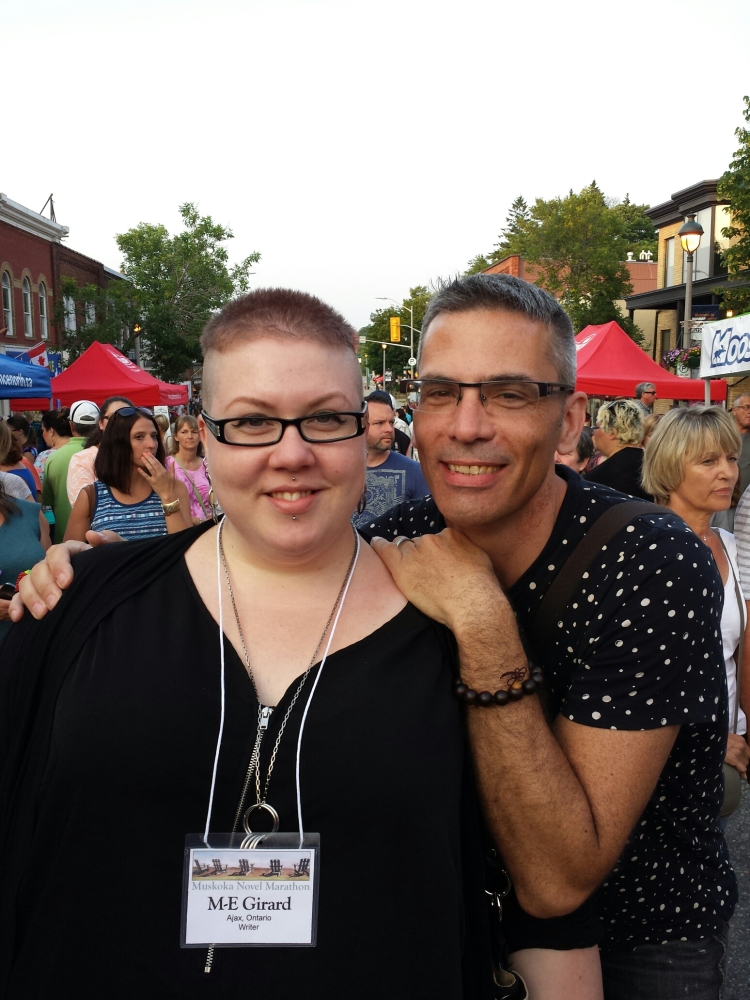
Last year I had the pleasure of reconnecting writerlyishly with M.E. Girard! It’s not always the same people at the marathon, but once you make the trip you’re a part of the #MNM family.

Why do I bring this event up today? Because registration is as much a spectacle as the event itself these days. Writers clamor to get in to this thing! With room for only 40 (ish) and rumours of its delightfulness spreading both far and wide (or near and far—as it were), it is getting increasingly difficult for a writer to procure his/her seat at the gala. As in, it is nigh on impossible.

And every March, like warriors of old, we stand before our keyboards on the night of registration and wait for the seconds to tick off… and for the virtual gate to open so we can scurry about and type our way into this yearly magical emporium of madness.

When the time comes and the gate opens, the Internet feels the tug of love from all points across Ontario as the virtual worms of registration information make their way to the Mother Ship of this Spectacular Spectacular up in the snowy northern outpost of Huntsville.

And at the end of registration night, there are virtual bodies scattered on dawn’s highway bleeding… Wait, no… sorry, I somehow channelled Jim Morrison for a second there. No bodies. BUT… there are, both near and far, those ecstatic to be ON THE BUS and those melancholy to have missed it.

Yes… I’m talking about the MUSKOKA NOVEL MARATHON again. My skin prickles tonight in the knowing that registration approaches. It is neither near nor far on the horizon. And I want to call myself among the tribe of #MNM2016 participants. I want it, I want it, I want it!

Where else in all the world can one writer sit in the same room as 40+ others and do nothing but write for 72hrs? Nowhere. Where else can one take communion with a writing community more vibrant, alive, exhausted, miserable, exuberant, joyful, angry, and insane? Nowhere. Where else can one come together with a group of like-minded people for a cause close and true to all of their hearts? Nowhere.

The Muskoka Novel Marathon Fundraiser for literacy in Simcoe Muskoka County is more than a fundraiser to raise money for literacy, and it’s more than the greatest weekend retreat for writers on the globe. It’s a religion and it’s a cult. But don’t tell anyone. We’d have writers coming from… well, coming from near and coming from far to be a part of the worshipping. We’d have to go underground just to exist. That’s how spectacular spectacular our 72hr novel writing (and I swear to God that’s all we do!!) Marathon happens to be.

This is why writers begin to lose sleep through February and early March. They imagine themselves not registering in time, not securing one of the coveted spots at the July Marathon, not being a part of the most magical writing weekend of the year. And they spend their time at their keyboards, fingers at the ready… Awaiting the opening bells of the registration melee that opens the chaotic yearly ritual.

We want to be there. We want to be fierce warriors against illiteracy and we want a weekend of writing bliss. Whether we come from near or far… We just want a seat at the table. The journey to the Muskoka Novel Marathon… it’s all about words.

Check out the MUSKOKA NOVEL MARATHON WEBSITE!
image
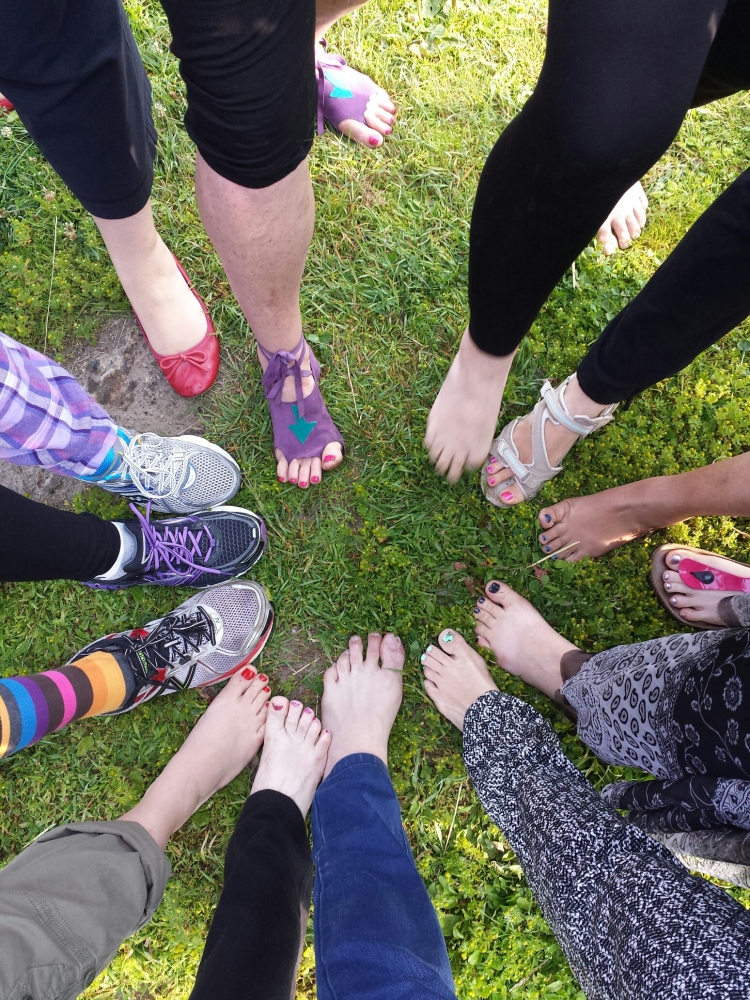
For the past few years Sue Kenney has been giving writers the gift of her “WALK FOR CREATIVITY” to allow us a reprieve to connect with nature, barefoot. It’s such a welcome part of the amazing weekend!

The Evolution of a Playwright – Writer Labels

Labels! They’re so difficult to own. I reluctantly called myself a writer because I was one who put words down on paper. Then, when my first novel was published, I reluctantly called myself an author. In between, I was a poet and a columnist and a freelance writer. These things that define me, if only momentarily, are also the things that seem too monumental for me to be. Even now, it seems impossible. Each one of these labels.

I’m thinking the greatest of my unfathomable writerly accomplishments is, however, none of the above. The whole time I wrote these other things, I imagined a day when I would only write plays. I mean, dialogue is king, right?! Why would I want to do anything else besides put words into the mouths of characters? What’s cooler than seeing your characters come to life on the boards? I can’t think of anything.

Ever since I first read Tennessee Williams, Shakespeare, Molière, and, finally, W. Somerset Maugham, back in high school, I’ve been a bit obsessed with the idea of becoming a playwright. A Streetcar Named Desire blew me away. Entirely. The raw savagery of Stanley Kowalski, mixed with the tragic delusional broken princess of Blanche Dubois was flawless. Even though Tartuffe was written in 1664 it still stands in a league of its own as a comedy. Not to mention Maugham’s The Bread Winner and The Constant Wife…but comedies that have lasted. I don’t even know where to begin with Shakespeare. I just love his plays. I had an English teacher in high school who was a bit of an eccentric–okay, a lot of an eccentric–he used to get us to push the desks to the walls and perform Shakespeare moments together in the centre of the classroom. These were divine moments.

I’ve had many pivotal moments as a writer when I experienced epiphanies about LABELS, as they pertain to writers. One of the biggest was when I realized Matthew Quick wrote both YA Lit and Adult Lit. This gave me permission to do the same. I know it shouldn’t be out-of-the-box thinking that one could cross-pollinate genres, markets, styles, and types of writing. One should just write what calls out to them the loudest to be written. But sometimes it takes seeing other people do things before you can give yourself permission to do them.

The second such epiphany I had was that I could be a novelist and a playwright. Maugham was right there in front of me, all that time. I even had his memoir about skating the duo existence of novelist/playwright to refer to. The Summing Up is one of my favourite books on writing. Why? Because it speaks to me. Maugham was honest about how he discovered his love of writing plays over novels. This quote sums it up nicely:

“Thank God, I can look at a sunset now without having to think how to describe it.” ~ W. Somerset Maugham

Writing plays removes the need for descriptive prose. Not that there’s anything wrong with it, so the saying goes. But when you don’t have the prose between the lines of dialogue, you are faced with only your characters. You are left with conversation. This is, for me, my favourite part of novel writing. It’s nice to slip out of the need to piece together an entire world of description in order to tell a story. When I wrote my first short play, I knew I had found something I would always love. When I saw that play performed, I was hooked forever. Those were my words coming out of the characters’ mouths. It was a thing of magic!

I will probably always write novels. As freeing as it is to have the director and the actors create the world surrounding the story, it is also rewarding to create that world yourself through prose. BUT…I don’t think I will ever feel as alive as a writer as I feel when I’m writing plays. I love writing the dialogue. I love walking around the house by myself reading the lines aloud to hear if they sound ‘right’. I love working and re-working each line until it does sound right. And I love sitting in my seat in front of the stage seeing real live people perform the words that came from my pen. I feel most evolved as a writer when I can sit back and watch my words take flight. There’s nothing like it. It’s a kind of happiness that begets desire. To watch one’s own play must be a high akin to the high an actor gets at the sound of the applause.

“Happiness, not in another place but this place…not for another hour, but this hour.” ~ Walt Whitman

Try new things. If you’re a poet, don’t be only a poet. If you’re a novelist, don’t be only a novelist. If you’re a sci-fi writer, don’t be only a sci-fi writer. Labels for writers are interchangeable. Unless you wish only to have one, you can have as many as you desire. Writers have great opportunities to allow themselves to constantly evolve. It’s scary to step out of your comfort zone…but only until that next zone you find yourself in fits as nicely as the last one did. Find your happiness as a writer in this hour. If there is something you want to try, don’t let fear stop you from doing so. Let your fear be the fuel you use to tackle it.

LISTED – Things in the Writer’s Toolbox

It’s been a while since I made a list here. I’ll try not to make this one too preachy or ranty. I will preface this list by saying it’s all been said before and you probably already know it all if you’re a writer. We should often remind ourselves of the important tools we have…because it’s so easy to forget the obvious.

What should every writer be equipped with? What are the necessary accoutrements to the handy box of tools they should always carry around with them?

  1. Vocal Cords – Seriously, this one cannot be stressed enough. What is one of the best things you could do for your writing? READ IT OUT LOUD. Where you hitch, fall, slumber, stall, falter, or stumble is where the reader will do the same. However you want to name it, if the flow derails while you’re reading aloud…there’s a good chance the same thing is going to happen with your reader. More than anything else, reading out loud allowed the writer to ensure that they are saying what they mean and meaning what they say. This is true of whatever you write…be it poetry, articles, plays, novels, short stories…what have you. It’s especially useful with dialogue…but don’t discount it with narrative. READ OUT LOUD.
  2. Always carry SOMETHING with you for note taking. When I first started out, the something was a pocket sized notebook and a pen. Now, it’s my Smartphone. I can just haul it out and jot a quick note for later. It’s not just for Facebook, Twitter, and Instagram. Use your phone as a writer. If, that is, you would prefer it to the good ole notepad. Whatever works…just don’t be without SOMETHING. Sometimes you only get one chance at grabbing a fleeting idea. I know this because I have lost a few in my time. “Oh, I’ll remember it!” has so often become, “Shit! What was that great idea I had for my next novel. It was SO good. What the hell was it?”
  3. READ. READ. READ. Be inspired by the work of others. Read in the genre/market you like to write in. THEN…read in genres/markets you don’t particularly care for. All good stories are fundamentally the same when you look at them through the eyes of a writer. You can get from them craft and style and wisdom. Don’t discount whole genres…if the story is well written it will be elevated from the genre in which it sits. It will teach you how to be a better writer.
  4. See 1. BUT find a way to do this in front of an audience. Find an open mic for writers in your area. Once you have read the work aloud to yourself–and made necessary edits based on how the words sounded to your ear–read it aloud to others. If there are no venues supporting open mic for writers in your area…organize one. Or read in front of volunteers. Another idea would be to have others read your work aloud TO YOU. That way, you can follow along with a second copy and see where they stumble. Edit as you go. I can’t say enough how important a step it is to HEAR what you write.
  5. Keep a file somewhere (either in the back of a notebook, or on your computer or some other device) called POSSIBLE TITLES. Dump your spur of the moment nuggets into this file. I don’t know about other writers, but for me…I ALWAYS have titles come to me randomly. Maybe in passing dialogue, or ads, or newspapers or websites…you see a string of words or hear a string of words and think, “Hmmm…that would make a great title.” Or, out of the blue silence of your interior monologue will come up a title fully formed. Latch onto it…jot it down. Use this file as jumping off points. If you’re struggling to begin something, read the titles and see if any of them speak to you. They could be novel titles, poem titles, article titles…what have you. The point is, they rose up to the surface and you had an aha moment. Save it for later. Use it. That’s what writers do.
  6. THE GOLDEN HOUR – Have a golden hour in every single day of the year. Dedicate this hour to WRITING. Don’t deviate. Sure, find a seven hour period one day in the fall where you write non-stop and amaze yourself with that day’s word count. But still…always have that one dedicated sacred hour. You will understand the need for it once you’ve been doing it for a number of weeks, months, years.
  7. See 3. Only this one is perhaps a bit more fun. GO TO THE MOVIES. Enjoy the movie with popcorn or nachos or whatever it is you gorge on when you’re at the movies. But go! And truly, enjoy it…but also bring your analytical writer mind with you. Have it sit in the seat beside you. Share your munchies with it. Make sure it is paying attention to the dialogue and the space between the dialogue while you’re laughing or crying or whatever it is the words are making you do. Every story has a story to tell the writer. If you pay attention, you will receive it. It could be what to do or what not to do. It could be megalithic or it could be subtle. PAY ATTENTION. Writer mind will watch the movie with a critical eye, even as you are busy filling your face with popcorn.
  8. Be aware of who you are. Know thyself. I say this because only when you know yourself will you be ready to hear WRITING ADVICE. When you just aren’t sure…you will attempt to follow ALL WRITERLY ADVICE blindly. And, my friend, you will drive yourself batty in the process. Do this, don’t do that…the advice is rampant and most of the time it comes across as absolute. THIS IS THE ONLY WAY is the ugly trapping of quite a lot of the advice for writers floating around out there. ONLY WHEN YOU KNOW YOURSELF can you call bullshit to the advice that doesn’t work for you. AND NO MATTER HOW SUCCESSFUL THE WRITER GIVING IT IS…DON’T LISTEN TO IT IF IT DOESN’T WORK FOR YOU. Don’t discard it as bad advice…don’t ever do that. If someone is considerate enough to give advice, it probably comes from a place of good intention…it is probably something that has proven to work for them. BUT writing advice is a tricky thing. Not all advice works for all writers. You have to find your way. It’s great to read how-tos or, say, lists like this one…BUT there is no BIBLE OF ALL THE RIGHT ADVICE THAT YOU MUST FOLLOW OR DIE. There is only YOU…and your words. So be kind to yourself when you are seeking writerly advice. Try it all if you want, but do not be rigid in your stubbornness to follow it all. That would just be impossible. KNOW THYSELF.

That’s enough ranting for now. Just write…